
Benjamin Fernandes — The Relentless Rise of a New African Leader
From the beginning, his journey would be defined not by certainty, but by access earned, not given.

By Capital Tanzania Magazine
April 28, 2026 · 5 min read
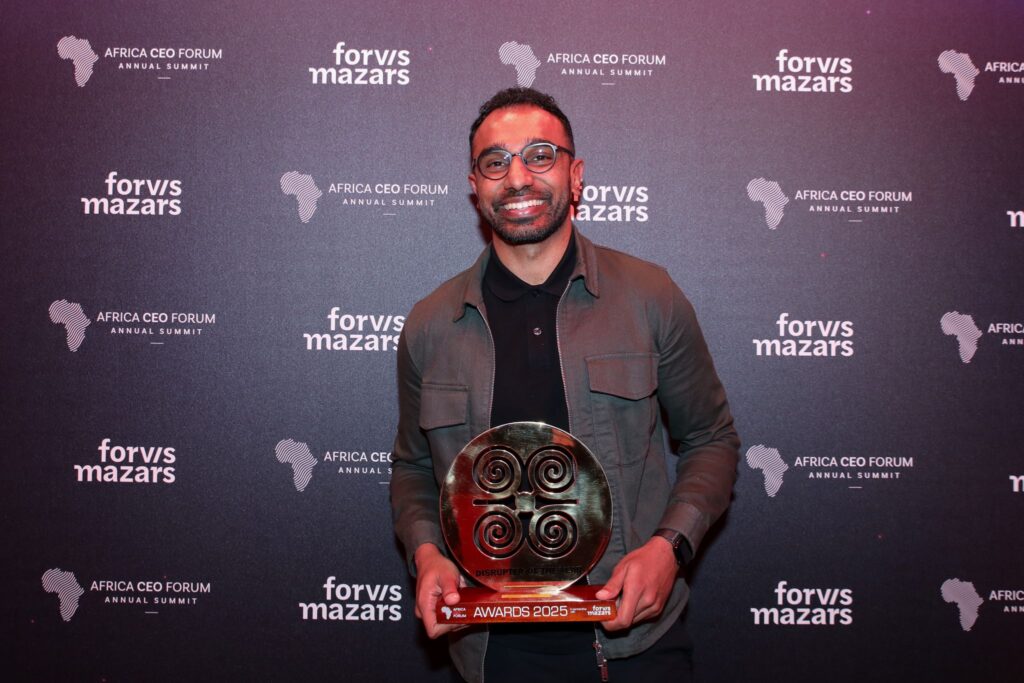
In the evolving story of African leadership, few narratives capture the tension between risk, resilience, and reinvention as clearly as that of Benjamin Fernandes.
Born in Dar es Salaam, Tanzania, Fernandes did not emerge from the traditional corridors of power or privilege. He was raised in a religious household—his father a pastor—and attended school on scholarship, a reality that shaped both his discipline and early worldview.
From the beginning, his journey would be defined not by certainty, but by access earned, not given.
Early Signs of Leadership

At just 17 years old, Fernandes entered the world of media, working in television and quickly rising to national recognition. His presence during major broadcasts—including coverage linked to the 2012 London Olympics—made him one of Tanzania’s most visible young personalities.
But visibility, as history would show, was only the first chapter.
Even then, his ambitions stretched beyond the screen.
Education Against the Odds
Fernandes’ academic journey reflects a pattern seen in many emerging African leaders—global exposure built on local sacrifice.
He earned scholarships that took him to the United States, eventually becoming:
-
The youngest African ever admitted to the MBA program at Stanford Graduate School of Business
-
The first Tanzanian to attend both Stanford GSB and Harvard Kennedy School of Government
At Stanford, he was one of only a handful selected from thousands of African applicants for the prestigious Africa MBA Fellowship.
These were not just academic milestones—they were signals of a new kind of African leadership emerging on the global stage.
A Defining Decision: Returning Home
After completing his MBA, Fernandes made a decision that surprised many.
Instead of pursuing high-paying opportunities abroad, he returned to Tanzania—a move widely covered in local media due to the scale of opportunities he left behind.
This decision would become one of the defining moments of his leadership story.
Because leadership, at its core, is not about where opportunity is greatest—
it is about where impact is most needed.
The Birth of NALA

In 2016, while still at Stanford, Fernandes began working on what would later become NALA, a fintech company focused on improving how money moves across Africa.
The problem was clear:
-
High transaction fees
-
Fragmented payment systems
-
Limited access to reliable financial tools
For millions of Africans, especially in the diaspora, sending money home remained inefficient and costly.
NALA set out to change that.
The Reality Behind the Success
What followed was not a smooth rise—but a series of setbacks that would define his leadership.
-
He faced multiple investor rejections, applying repeatedly without success
-
His company struggled to find product-market fit in its early stages
-
At one point, regulatory pressure forced him to shut down operations
-
His co-founder left just days before a critical investor presentation
-
During the COVID-19 period, the company nearly collapsed, forcing layoffs down to just a handful of employees
These are not footnotes.
They are the story.
Reinvention Under Pressure
Rather than abandon the venture, Fernandes made a critical pivot.
He shifted NALA’s focus toward cross-border remittances, targeting Africans in the diaspora who send money back home. To understand the market, he went directly to the people—spending time in diaspora communities, speaking in churches and mosques, and manually building his first user base.
It was a return to fundamentals:
-
Listen
-
Learn
-
Build
That decision changed everything.
Scaling Against the Odds
From those early struggles, NALA began to grow.
-
Accepted into Y Combinator, becoming one of the first Tanzanian startups to do so
-
Raised millions in venture capital from global investors
-
Expanded services across the US, UK, and Europe into Africa
-
Built infrastructure to reduce the cost and complexity of sending money home
What started as a struggling startup evolved into one of Africa’s most ambitious fintech companies.
Leadership Defined by Execution
Fernandes’ story is not simply about entrepreneurship—it is about a shift in how leadership is defined.
He represents a generation that:
-
Builds institutions instead of waiting for them
-
Solves problems instead of studying them
-
Competes globally while operating locally
His leadership has also extended beyond business. He has organized entrepreneurship seminars across Tanzania, reaching thousands of young people and advocating for youth-driven innovation.
The Bigger Meaning
There is a deeper context to this story.
Africa is the youngest continent in the world. Yet millions of young people enter systems that are not built to absorb their ambition. In this environment, leadership is no longer a title—it is an action.
Benjamin Fernandes’ journey reflects this shift.
Not because it is perfect.
But because it is real.
Final Word
From a scholarship student in Dar es Salaam…
to a television personality…
to one of Africa’s most recognized fintech founders—
Benjamin Fernandes embodies a new model of leadership:
One that is tested by failure, shaped by discipline, and defined by execution.
And in doing so, he sends a clear message to a generation:
The future of African leadership will not be inherited.
It will be built.
More from Capital Tanzania

Investment
Best Investment Opportunities in Tanzania From 2026
As Tanzania enters a new growth cycle, the strongest opportunities are shifting from raw potential to value addition, infrastructure, energy, food systems, and regional trade.

Investment
Tanzania–Kenya Business Forum 2026: A New Regional Trade Moment for East Africa
The forum brought together government leaders, investors, private-sector players, and trade institutions under one central message: unlocking private sector growth and investment.

Investment
Top Five Sectors to Invest in Tanzania: Where Capital Should Look Next
For investors, the real question is no longer whether Tanzania has opportunities. The question is which sectors have the strongest mix of demand, policy support, resource advantage and long-term growth potential.