
East Africa’s New Investment Race: Ports, Power, AI and Regional Capital
That argument matters because investment does not depend only on the availability of projects. It also depends on the price of money.

By Capital Tanzania Magazine
May 12, 2026 · 5 min read
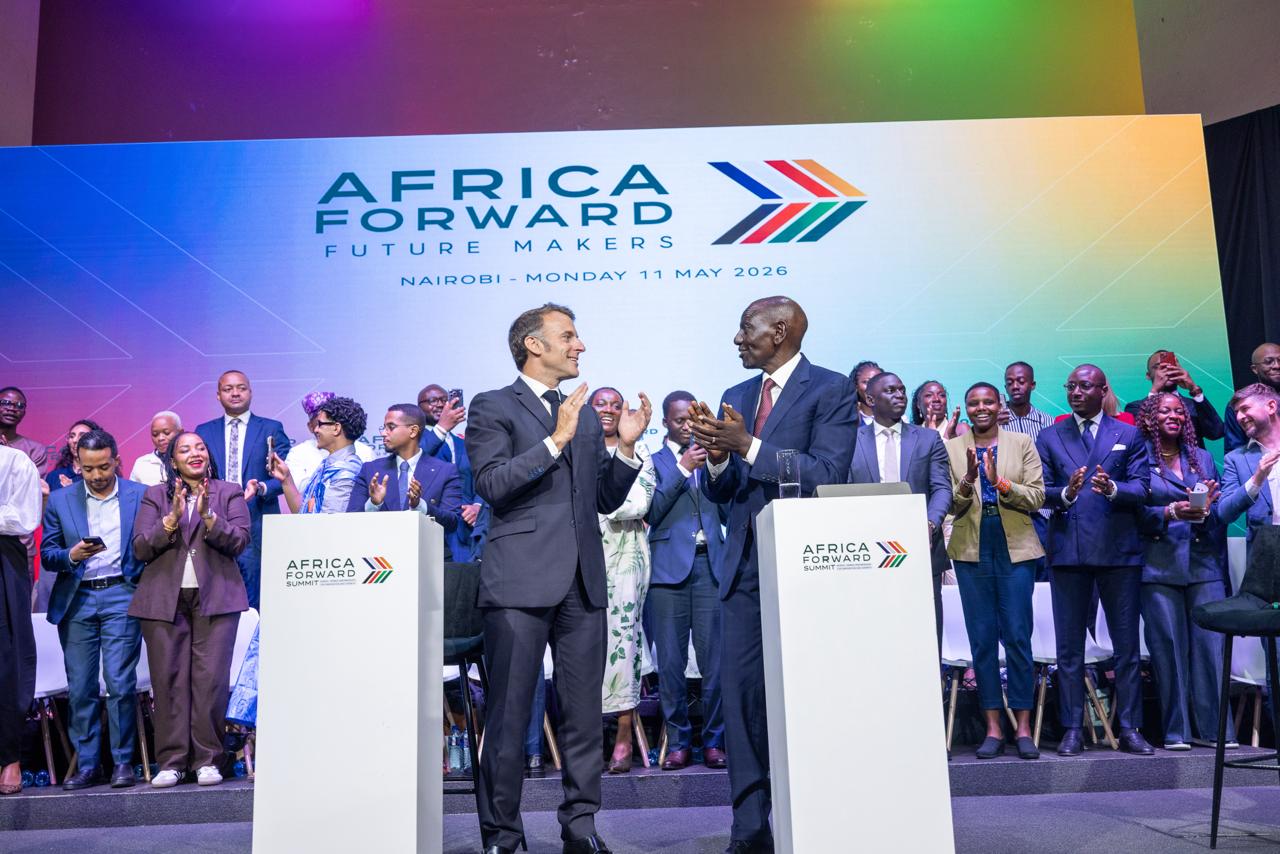
NAIROBI — A high-level summit in Kenya has put one of Africa’s most important economic arguments back at the centre of global investment debate: the continent is not short of opportunities, but it continues to face some of the world’s most difficult conditions for accessing affordable capital.
The Africa Forward Summit 2026, held in Nairobi on May 11–12, brought together French President Emmanuel Macron, Kenyan President William Ruto, more than 30 African delegations, business leaders, investors, international financial institutions and development partners. The summit was organised around Africa–France partnerships for innovation and growth, with official themes including energy transition and green industrialisation, reform of the international financial architecture, blue economy, sustainable agriculture, artificial intelligence and digital technologies, health, and industrialisation.
But behind the formal summit language, a sharper question is emerging: can Africa change the way global capital sees risk?
Reuters reported that African leaders used the Nairobi gathering to call for a rethink of how financial risk is priced on the continent. Kenya’s Foreign Minister Musalia Mudavadi told Reuters that African governments and businesses have often faced higher borrowing costs because the continent is perceived as a high-risk region. African leaders argue that this perception raises the cost of credit, discourages investment and slows the delivery of projects that could create jobs and expand productive capacity.
That argument matters because investment does not depend only on the availability of projects. It also depends on the price of money. A port expansion, power plant, data centre, railway, industrial park or manufacturing facility can be commercially attractive, but if financing is too expensive, the project may be delayed, scaled down or abandoned.
For Africa, the risk-pricing debate is therefore not a technical discussion for bankers. It is a development issue.
It affects the speed at which countries can build infrastructure, support industry, create employment and compete for global supply chains.
A €23 Billion Signal
The summit also produced major investment announcements. Reuters reported that President Macron announced about €23 billion, roughly $27 billion, in joint investments involving French and African companies. The package includes around €14 billion from French companies and €9 billion from African companies, with investments linked to infrastructure, clean energy, artificial intelligence, technology and other sectors.
One of the most visible commitments is the planned €700 million investment by French shipping group CMA CGM to modernise a terminal at the Port of Mombasa. Reuters reported that the announcement came during Macron’s state visit to Kenya, ahead of the summit.
For Kenya, the investment strengthens Mombasa’s role as a major regional gateway. For East Africa, it sends a wider message: the region’s next phase of economic competition will be shaped by infrastructure that can move goods faster, cheaper and more reliably.
Mombasa is not only a Kenyan asset. It is a trade artery for the wider region, handling cargo connected to inland markets across East Africa and the Great Lakes. When a port of that scale attracts large investment, the benefits can extend beyond shipping lines. It can influence warehousing, trucking, rail connectivity, fuel distribution, agricultural exports, manufacturing supply chains and regional logistics services.
This is why port investment has become a strategic issue.
Ports are no longer just places where ships dock. They are platforms for trade, industrial development and regional influence.
Why Mombasa Matters
The Mombasa investment comes at a time when East African economies are trying to strengthen their position in regional and global trade. Countries across the region are competing to attract investors who want access to the African Continental Free Trade Area, regional consumer markets and supply-chain opportunities.
Kenya is using the summit to attract French investors interested in Africa’s free trade potential and to advance discussions on a fairer global financial system, according to Reuters.
That dual focus is important. Infrastructure and finance are connected. A country can advertise regional market access, but investors still need ports, roads, reliable power, customs efficiency and financing structures that make projects viable.
Mombasa’s modernisation therefore has implications beyond Kenya. It is part of a broader East African race to build the infrastructure backbone required for trade and industrial expansion.
The lesson for the region is clear: capital will move toward countries that can reduce friction.
Faster ports reduce costs. Reliable power reduces operational risk. Efficient customs systems reduce delays. Strong digital infrastructure improves transparency. Better financing reduces the gap between opportunity and execution.
The Cost of Capital Problem
Africa’s demand for fairer risk pricing has become more urgent because many governments and companies face higher interest rates than their peers in other regions. African officials have long argued that global credit rating methodologies sometimes overstate risk on the continent, making it more expensive to borrow.
Reuters reported that leaders at the summit discussed the creation of an African credit ratings agency, which supporters say could provide a more accurate assessment of African risk. Major global rating agencies, including S&P Global Ratings, Moody’s and Fitch, reject accusations of regional bias and say they apply globally disclosed criteria.
The dispute is significant because ratings influence borrowing costs. Higher perceived risk can raise interest rates for governments, state-owned enterprises, banks and private companies. That can make infrastructure projects harder to finance and reduce the ability of African firms to expand.
The issue has already created tension. Reuters reported that the African Export-Import Bank severed ties with Fitch Ratings in January over the agency’s approach to assessing its risk.
For investors, this debate is not only political. It affects deal flow. If risk is priced too aggressively, viable African projects may fail to reach financial close. If risk is priced more accurately, more projects could attract long-term capital.
This is why the Nairobi summit matters. It is not only about announcing deals. It is about challenging the financial architecture that determines whether deals can happen at scale.
Power as the Foundation of Investment
Clean energy was one of the major areas linked to the summit’s investment discussions and announcements. Reuters reported that clean energy, AI and technology were among the focus areas of the investment package.
For East Africa, this is not simply an environmental issue. Energy is now a core investment requirement.
Factories need stable electricity. Ports need power for modern cargo systems. Cold-chain facilities need uninterrupted supply. Data centres require large amounts of reliable power. Mining, agro-processing and manufacturing all depend on predictable energy.
This is why clean energy and industrialisation are increasingly discussed together. The official summit agenda also links energy transition with green industrialisation, reflecting the growing view that Africa’s energy strategy must support production, jobs and industrial growth, not only household electrification.
In practical terms, the countries that can provide reliable, affordable and scalable power will have a major advantage in attracting investment.
Energy is no longer just a public utility issue.
It is part of a country’s investment brand.
AI Needs Infrastructure, Not Just Ambition
Artificial intelligence also featured prominently in the summit’s themes and investment discussions. The official summit agenda identifies AI and digital technologies as one of the key areas, including investment in digital infrastructure, open AI partnerships, start-up growth, talent training and financing for the high-tech sector.
But AI investment in Africa will depend on more than enthusiasm.
AI requires data centres, high-performance computing, cloud services, fibre networks, cybersecurity, skilled workers, regulation and reliable electricity. Without these foundations, AI risks becoming another conference slogan rather than a productive industry.
Recent research on AI development in Africa points to major infrastructure and policy gaps, including limited access to high-performance computing, cloud access challenges, foreign-exchange constraints and fragmented data-sovereignty rules. The research argues that sustainable AI adoption requires stronger access to compute, data and energy.
That makes the AI conversation at the Nairobi summit especially important. The real investment opportunity is not only in AI applications. It is in the infrastructure that allows digital economies to function.
In the old economy, ports hosted trade.
In the digital economy, data centres and cloud infrastructure will host value.
France’s Strategic Pivot
The summit also comes at a sensitive time for France’s relationship with Africa. Reuters reported that the Nairobi summit is the first such France-organised event in an English-speaking African country since France began holding similar gatherings in the 1970s. The shift follows a series of setbacks for Paris in parts of West Africa, where military-led governments have reduced French influence and in some cases moved closer to Russia.
The Associated Press also reported that France is seeking a revised partnership strategy with Africa, with a focus on English-speaking countries as it completes military withdrawals from several West African states.
For East Africa, this geopolitical shift creates both opportunity and responsibility.
Global powers are looking for new economic and strategic partnerships. But African countries must ensure that investment deals are structured around long-term value, not short-term visibility.
The key questions are practical: Will the investments create jobs? Will they transfer skills? Will local companies participate? Will infrastructure reduce costs for the wider economy? Will digital investments build local capacity? Will clean energy projects support industrial production?
Large numbers matter, but impact matters more.
What This Means for East Africa
The Nairobi summit shows that East Africa is becoming a more important stage for global investment competition. The region has ports, fast-growing cities, young populations, energy needs, agricultural potential, digital demand and access to continental trade opportunities.
But the summit also shows that attracting investment now requires more than potential.
Countries must present bankable projects. They must reduce policy uncertainty. They must improve infrastructure performance. They must strengthen regulatory systems. They must show investors how returns will be generated and how risks will be managed.
For East Africa, the next investment cycle will likely be shaped by four pillars.
First, ports and logistics. The Mombasa investment shows that trade gateways are becoming central to regional competitiveness.
Second, energy. Clean and reliable power will determine whether countries can support industry, data infrastructure and modern services.
Third, digital infrastructure and AI. Countries that build the foundations for cloud, data and AI will be better positioned for the next phase of global business.
Fourth, capital access. Without fairer financing, many promising projects will remain underdeveloped.
The Bottom Line
The Africa Forward Summit is more than a diplomatic event. It is a sign that Africa’s investment debate is moving from broad opportunity to financial structure, infrastructure quality and execution capacity.
The reported €23 billion investment package, the €700 million Mombasa port commitment, the focus on clean energy and AI, and the debate on risk pricing all point to one conclusion: East Africa is entering a more competitive investment phase.
The region has the markets and the ambition.
The question now is whether it can build the systems that allow capital to move with confidence.
In this new race, countries will not win because they say they are ready.
They will win because investors can see that they are.
More from Capital Tanzania
Investment
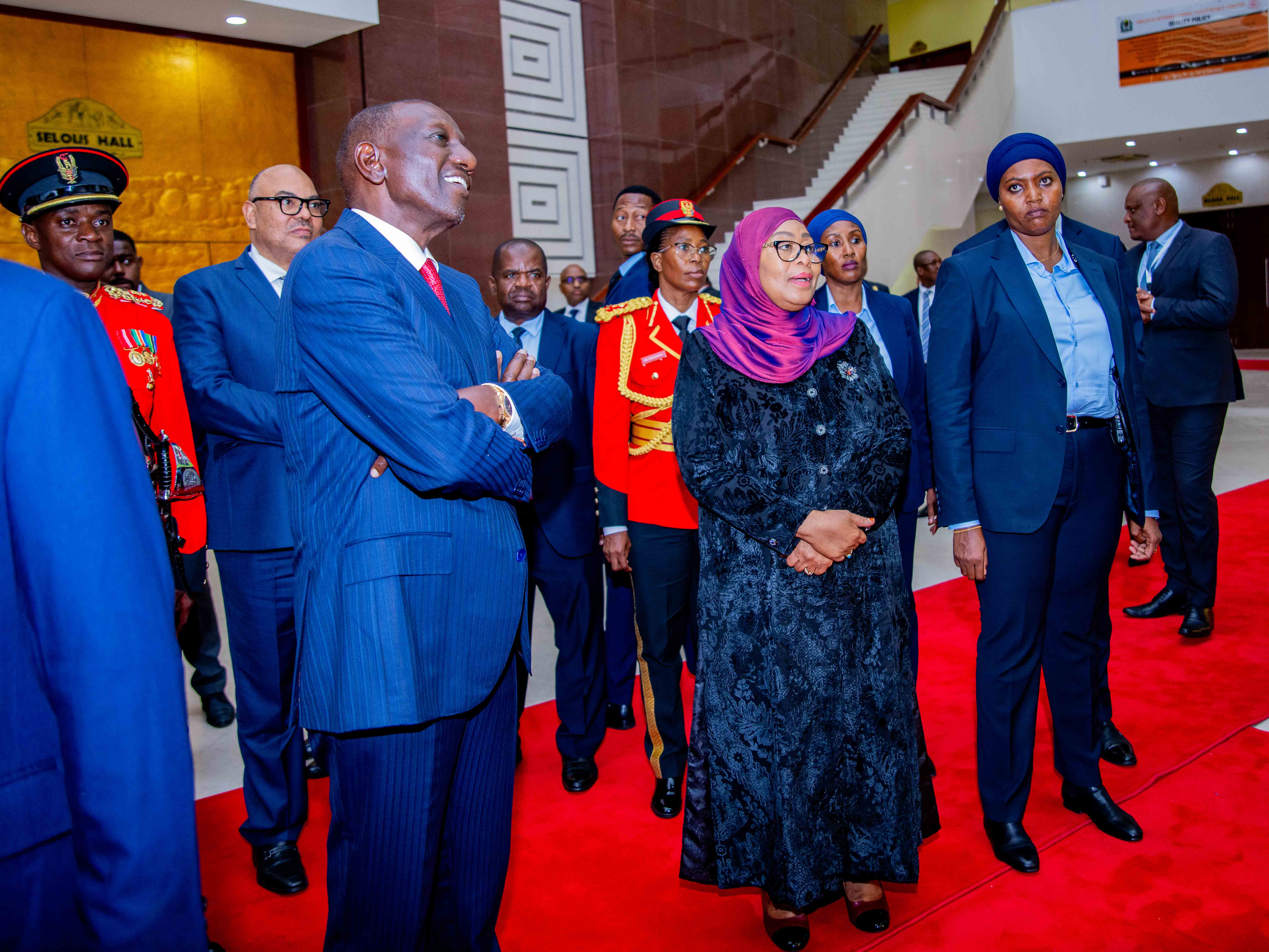
Tanzania–Kenya Business Forum 2026: A New Regional Trade Moment for East Africa
The forum brought together government leaders, investors, private-sector players, and trade institutions under one central message: unlocking private sector growth and investment.
Investment
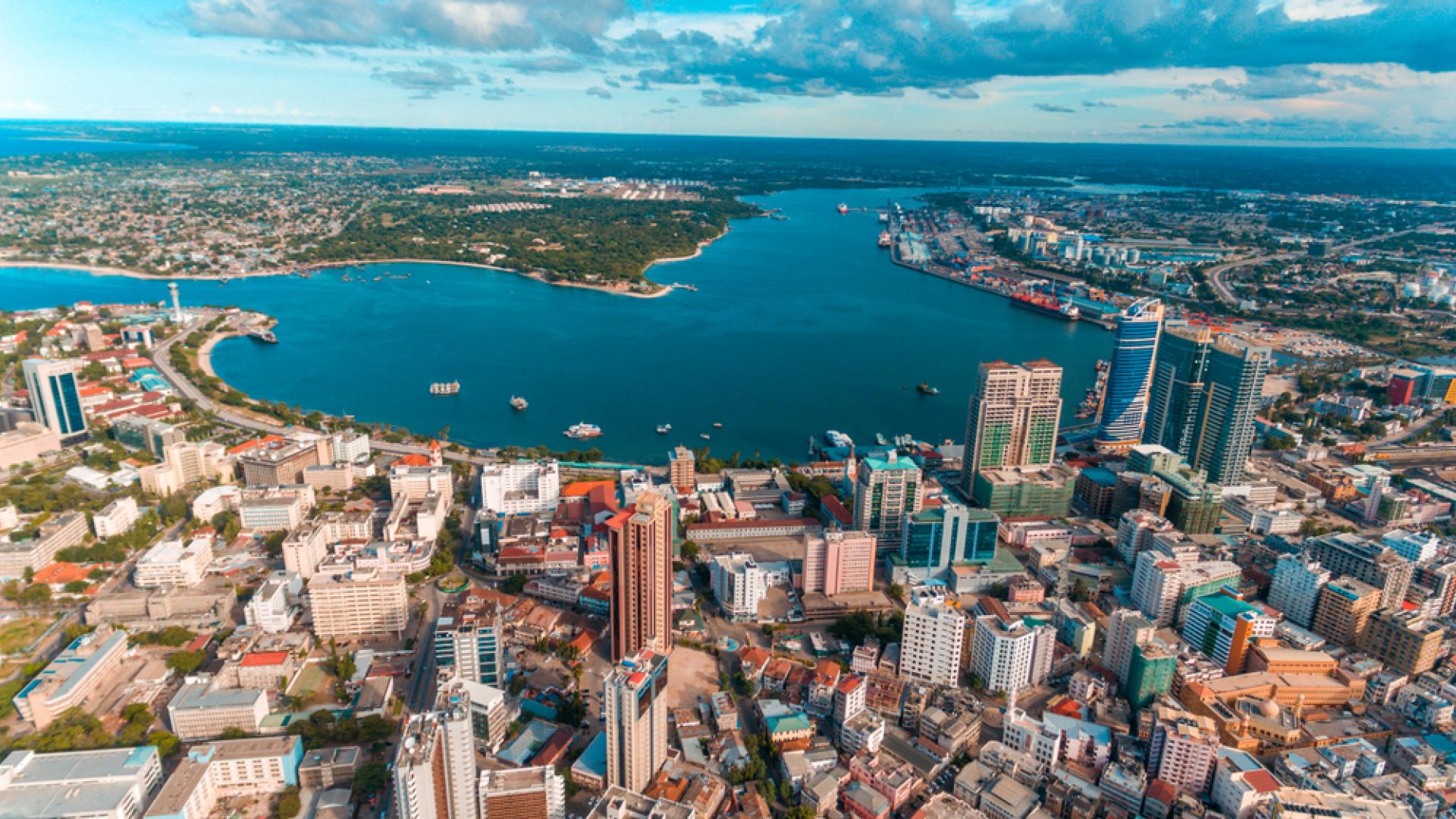
Top Five Sectors to Invest in Tanzania: Where Capital Should Look Next
For investors, the real question is no longer whether Tanzania has opportunities. The question is which sectors have the strongest mix of demand, policy support, resource advantage and long-term growth potential.
Investment
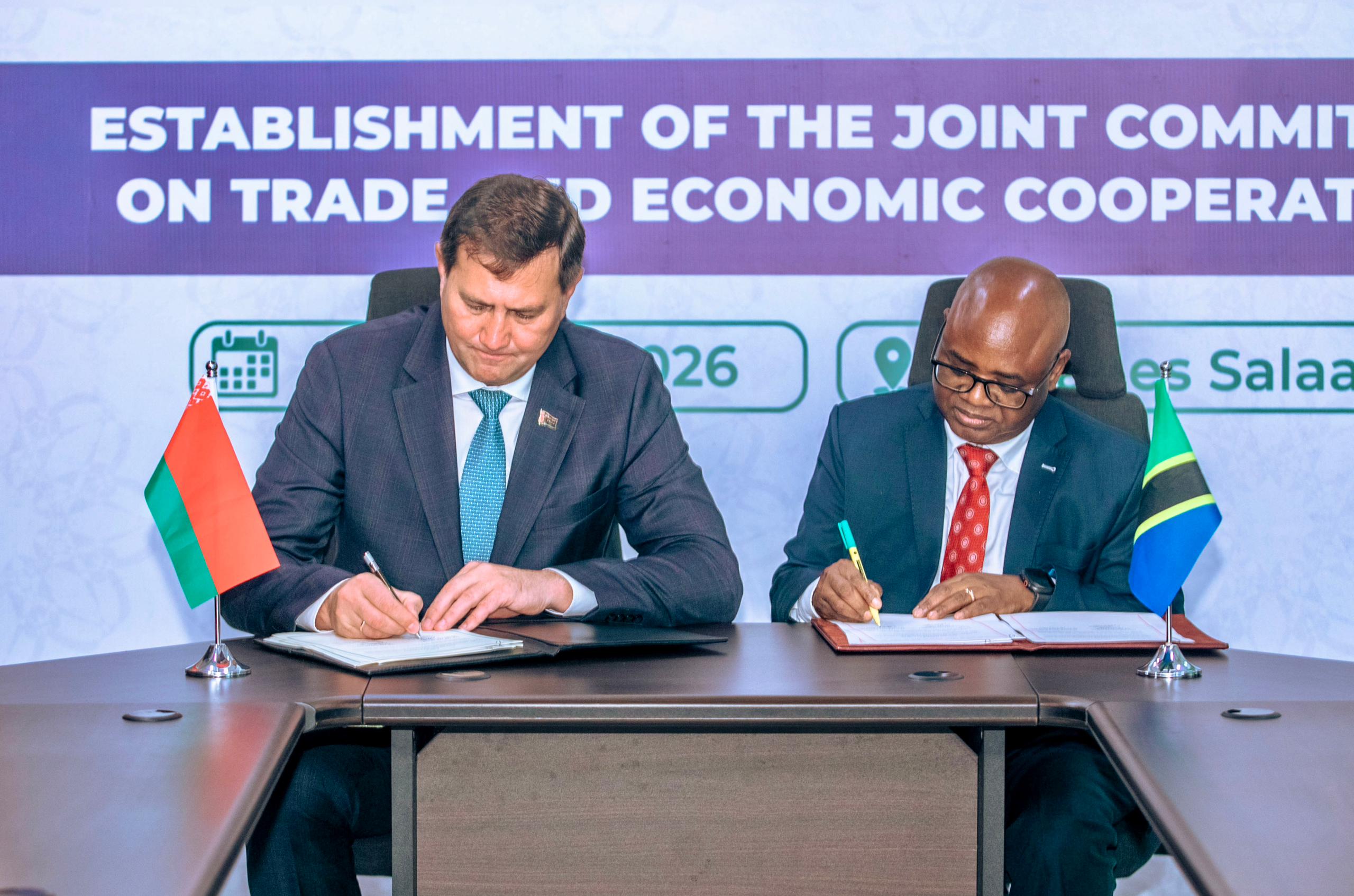
Rewiring Partnerships: Why Tanzania’s Belarus Deal Matters Now
At first glance, Belarus may not appear among Tanzania’s traditional investment partners. But that’s precisely where the strategic opportunity lies.