
The Refinery That Could Shift East Africa’s Economic Balance
Why a proposal in Tanga is about more than fuel—and what it reveals about where the region is heading

By Capital Tanzania Magazine
April 25, 2026 · 5 min read
Some ideas arrive quietly, then refuse to leave.
The proposed oil refinery in Tanga is one of them.
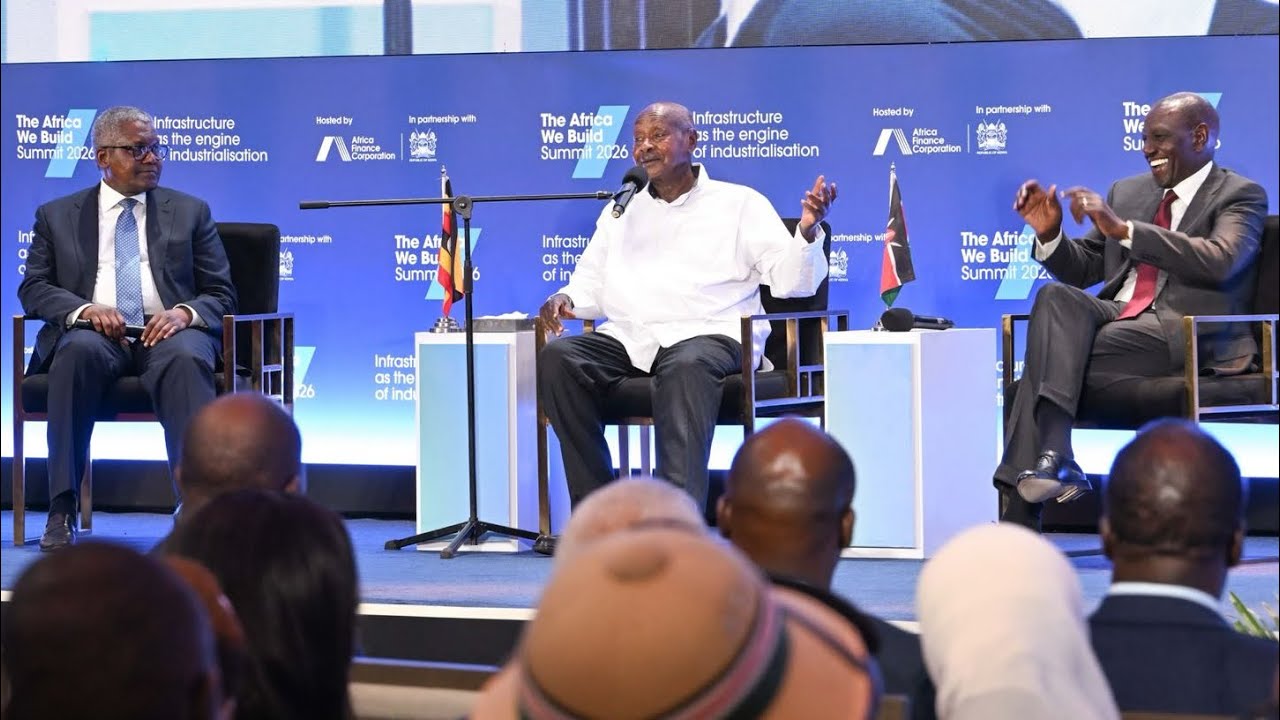
At a recent infrastructure summit in Nairobi, what began as a conversation quickly turned into something more concrete. It wasn’t framed as speculation. It was presented as a possibility with weight behind it—one that brings together governments, regional ambition, and one of Africa’s most experienced industrial builders.
At the center of it is Aliko Dangote, who made a direct offer: if governments align, he is ready to build a refinery in East Africa comparable in scale to his Lagos facility.
That single statement changed the tone of the discussion.
Because this is not a proposal built on theory. It is built on precedent.
What followed made the regional dimension even clearer.
Speaking at the same event, William Ruto confirmed that discussions are already underway between Kenya, Uganda, and Dangote, with Tanzania identified as the likely host.
The refinery, as described, would not serve one country. It would process crude from across the region—including the Democratic Republic of Congo and South Sudan—turning Tanga into a shared industrial point for multiple economies.
That framing matters.
Because it signals a shift in how East Africa is beginning to think about infrastructure—not as isolated national assets, but as regional systems designed for shared use.
To understand why this moment is gaining traction, you have to look at what is happening beyond the region.
Global fuel supply has become increasingly unstable. Disruptions in shipping routes—particularly through the Strait of Hormuz—have raised costs and tightened access to refined petroleum.
For East African countries that rely heavily on imported fuel, the effect is immediate. Prices rise, supply becomes uncertain, and entire sectors—from transport to manufacturing—feel the pressure.
This is not a new vulnerability.
But it has become harder to ignore.
At the same time, the region is not lacking in resources.
Uganda’s oil production, for example, is expected to flow through the East African Crude Oil Pipeline (EACOP)—a 1,443-kilometre corridor linking inland fields to the Tanzanian coast.
Tanga sits at the end of that system.
That alone gives it strategic importance.
But the question now is not just where the oil flows—it is what happens to it next.
Without refining capacity, crude continues its journey outward, to be processed elsewhere. Value is created abroad, then sold back into the region as finished fuel.
The refinery proposal challenges that pattern.
It asks a different question:
What if the value stayed here?
This is where Tanzania’s position becomes more than geographic.
It becomes strategic.
Tanga connects inland production to global shipping routes. It links landlocked economies to the coast. It sits within reach of multiple markets, not just one.
For investors, that changes the equation.
A refinery in such a location is not dependent on domestic demand alone. It becomes part of a broader regional network—one that supports distribution, storage, transport, and industrial activity across borders.
And that is where the real opportunity begins.
Around any refinery of this scale, an ecosystem forms.
Not immediately, but inevitably.
Fuel logistics expand. Storage infrastructure grows. Engineering services, maintenance operations, transport networks, and financing structures begin to align around the core asset.
The refinery becomes the anchor.
Everything else builds around it.
What gives this proposal additional credibility is Dangote’s own track record.
His Lagos refinery, with a capacity of roughly 650,000 barrels per day, has already begun supplying refined products across Africa, including to East African markets.
This is not a vision waiting to be tested.
It is a model that has already been executed—and is now being considered for replication.
Still, the path forward is not automatic.
Projects of this scale depend on alignment—between governments, between financing partners, and between long-term national priorities that do not always move in sync.
Ownership structures must be agreed. Supply must be secured. Distribution must be coordinated.
These are the points where ambition often meets reality.
But even at this stage, something important has already happened.
The idea has moved from private discussion to public alignment.
Leaders are speaking about it openly. Investors are listening. The region is, at least in principle, agreeing on the need.
And that alone is a shift.
Perhaps the most revealing moment came from Yoweri Museveni, who framed the issue in broader terms.
He pointed out the difference between exporting raw materials and processing them—between selling value cheaply and capturing it fully.
The numbers make the argument clear.
Unprocessed resources leave the region with limited returns. Processed products multiply that value—along with jobs, industries, and long-term economic impact.
The refinery, in that sense, is not just about oil.
It is about shifting where value is created.
For Tanzania, this is where timing becomes critical.
The country is increasingly positioned at the intersection of:
-
regional trade
-
energy infrastructure
-
logistics corridors
-
and industrial expansion
Projects like the Tanga refinery are not isolated opportunities. They are part of a pattern—one where Tanzania becomes the meeting point between inland resources and global markets.
Capital Tanzania Perspective
Some investments change industries.
Others change how regions think about themselves.
The proposed refinery in Tanga sits at that intersection.
If it moves forward, it will not just alter how fuel is produced and distributed. It will signal that East Africa is ready to build at scale—together.
And in that story, Tanzania is not just participating.
It is positioned at the center.
More from Capital Tanzania
Investment
Best Investment Opportunities in Tanzania From 2026
As Tanzania enters a new growth cycle, the strongest opportunities are shifting from raw potential to value addition, infrastructure, energy, food systems, and regional trade.
Investment
Tanzania–Kenya Business Forum 2026: A New Regional Trade Moment for East Africa
The forum brought together government leaders, investors, private-sector players, and trade institutions under one central message: unlocking private sector growth and investment.
Investment
Top Five Sectors to Invest in Tanzania: Where Capital Should Look Next
For investors, the real question is no longer whether Tanzania has opportunities. The question is which sectors have the strongest mix of demand, policy support, resource advantage and long-term growth potential.